Catalogue · No. 22 · First Documents
Kino Eye
Kino-glaz
Dziga Vertov · 1924 · USSR · 78 min
Synopsis
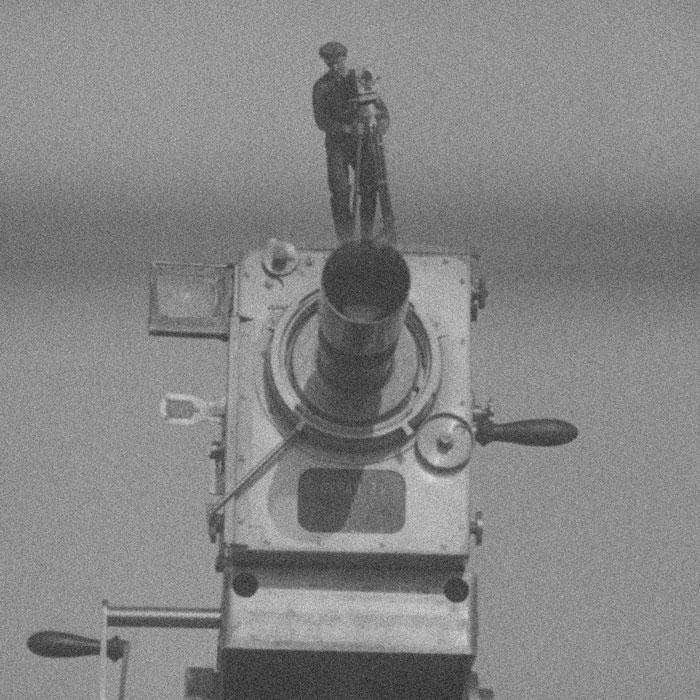
Promoting 'life caught unawares,' Dziga Vertov captures Soviet reality without actors, observing Young Pioneers and the mechanics of daily existence. The camera acts as a superior eye, revealing a 'film-truth' invisible to humans through trick photography. This experimental manifesto of the Kino-Pravda movement rejects theatrical storytelling, celebrating the objective power of the mechanical lens to construct a new, revolutionary perception of the world.
Critique
Dziga Vertov’s experimental manifesto rejected theatrical storytelling to celebrate the 'mechanical eye' of the camera. By capturing life 'unawares,' it sought a truth deeper than human perception, using reverse motion, freeze frames, and animation. It laid the groundwork for Man with a Movie Camera and the entire distinct style of Soviet montage. This film is a radical assertion that cinema is not just a recording device but a tool to reorganize reality. It remains a vital text for understanding the political and artistic potential of the documentary form.
Technical sheet
- Director
- Dziga Vertov
- Original title
- Kino-glaz
- Year
- 1924
- Country
- USSR
- Running time
- 78 min
- Genre
- Documentary
- Written by
- Dziga Vertov
- Cinematography
- Mikhail Kaufman
- Production
- Goskino USSR
- Music
- Newly composed original score
Licensing
Screening availability
- Theatrical screenings
- Non-theatrical screenings
- Festivals and cinematheques
- Educational screenings
- Television broadcasting
- Digital platforms and streaming
- Promotional and editorial use
- Licensing of graphic and visual materials
Available formats
- DCP
- DCP with subtitles
- Apple ProRes
- MP4 Screening File
- MP4 Rehearsal Copy for Musicians (silent films)
- Blu-ray
- High-resolution archival masters
Promotional materials
- Posters
- Press stills
- Promotional assets
- Screening support materials
Available subtitles
- English
- Spanish
- French
- Portuguese
- Italian
- German